
Why lowering pH in animal housing is critical to animal health

For farmers managing housed animals – especially young calves, lambs, goat kids and piglets - the environment matters more than it might seem. One of the most important, yet often overlooked, factors is pH.

A low pH environment is critical to protecting your animals’ natural defence system.

The role of skin and sebum

An animal’s skin is its first barrier against disease. Covering that skin is a thin, protective layer called sebum.

Sebum is a sticky, slightly acidic substance made up of:

* Waxes and fatty acids

* Natural enzymes

* Beneficial, non-harmful bacteria

This layer keeps the skin moist, flexible, and resilient.

More importantly, its natural acidity helps inhibit harmful bacteria, making it a critical first line of defence against infection.

What happens in high pH environments?
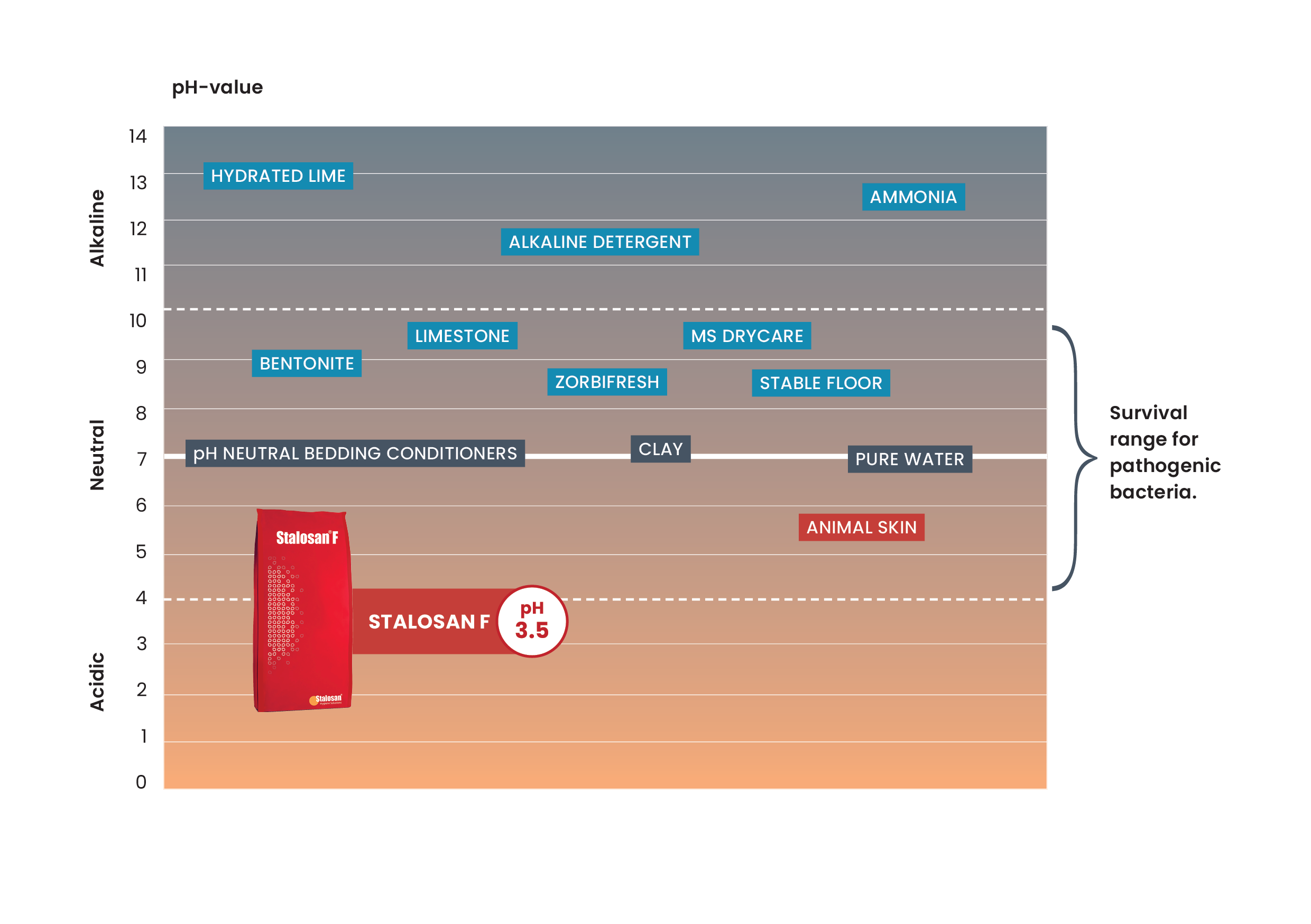
In many animal housing systems, conditions can quickly become highly alkaline.

* Ammonia from manure can reach a pH of around 13

* Common bedding powders containing lime or limestone often sit between pH 9 and 13

These alkaline conditions have a direct impact on the animal’s skin.
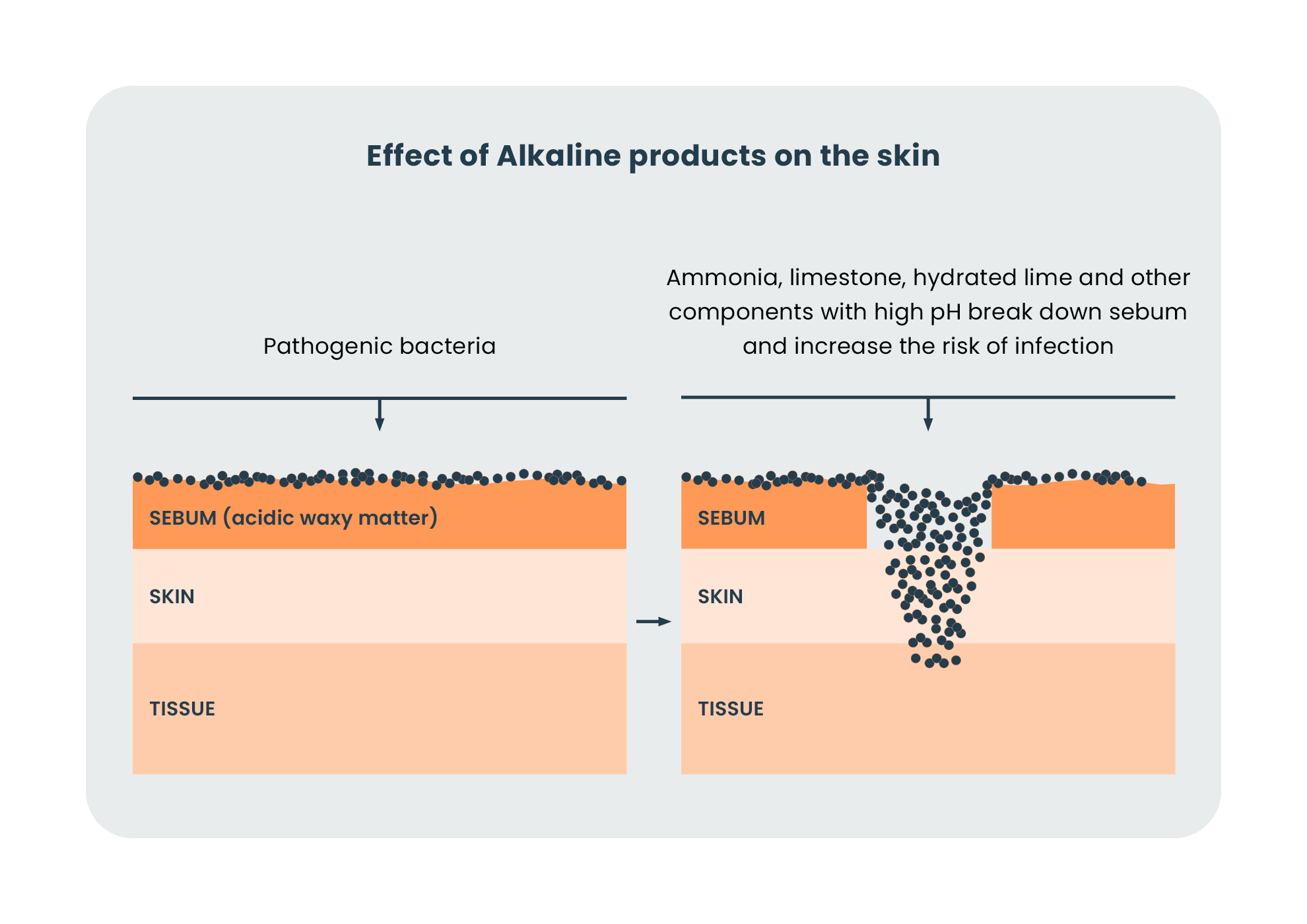
They break down sebum, stripping away that protective layer. Once this happens:

  • Skin becomes more exposed and vulnerable
  • Harmful bacteria can colonise more easily
  • The risk of infection increases significantly

In simple terms, when pH rises, the animal loses one of its most effective natural defences.

Why bacteria prefer alkaline conditions

Most pathogenic bacteria perform poorly in acidic environments and thrive when conditions shift toward alkaline.

When ammonia builds up and pH rises:

* Bacterial growth becomes easier

* Disease pressure increases

* Hygiene challenges multiply, even in well-managed systems

This is why simply drying bedding is not enough. The chemical balance of the environment matters just as much.


The importance of lowering pH

To support animal health, the goal is to:

  • Neutralise ammonia
  • Shift pH from alkaline toward neutral or slightly acidic
  • Protect the integrity of the skin and sebum layer

Using a low-pH bedding product – like Stalosan F - helps maintain this balance.


Unlike alkaline powders, Stalosan F will help:

  • Support the skin’s natural defences
  • Prevent the breakdown of sebum
  • Create conditions that are less favourable for pathogens


A practical takeaway for livestock farmers

If your animals are exposed to constant alkaline conditions, their natural protection is steadily eroded. Over time, this leads to higher disease risk and reduced performance.

Managing pH in animal housing is not an extra step. It is a core part of maintaining:

  • Healthy skin
  • Lower infection pressure
  • Better overall animal wellbeing

A drier shed helps, but a balanced pH environment is best for the animals – and anyone working in the shed.

Scroll to Top