
Why lowering pH in animal housing is critical to animal health
For farmers managing housed animals – especially young calves, lambs, goat kids and piglets - the environment matters more than it might seem. One of the most important, yet often overlooked, factors is pH.
A low pH environment is critical to protecting your animals’ natural defence system.
The role of skin and sebum
An animal’s skin is its first barrier against disease. Covering that skin is a thin, protective layer called sebum.
Sebum is a sticky, slightly acidic substance made up of:
* Waxes and fatty acids
* Natural enzymes
* Beneficial, non-harmful bacteria
This layer keeps the skin moist, flexible, and resilient.
More importantly, its natural acidity helps inhibit harmful bacteria, making it a critical first line of defence against infection.
What happens in high pH environments?
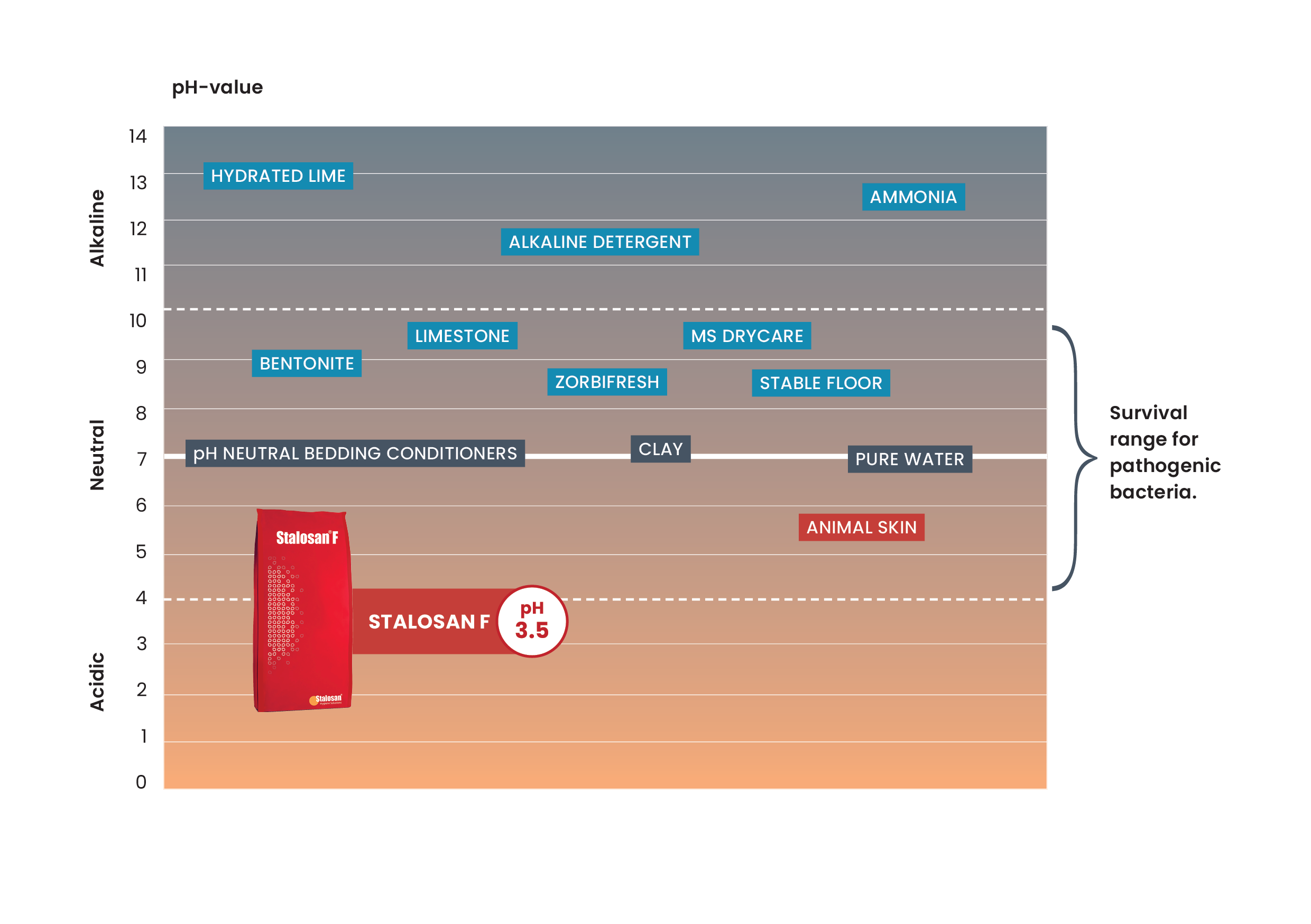
These alkaline conditions have a direct impact on the animal’s skin.
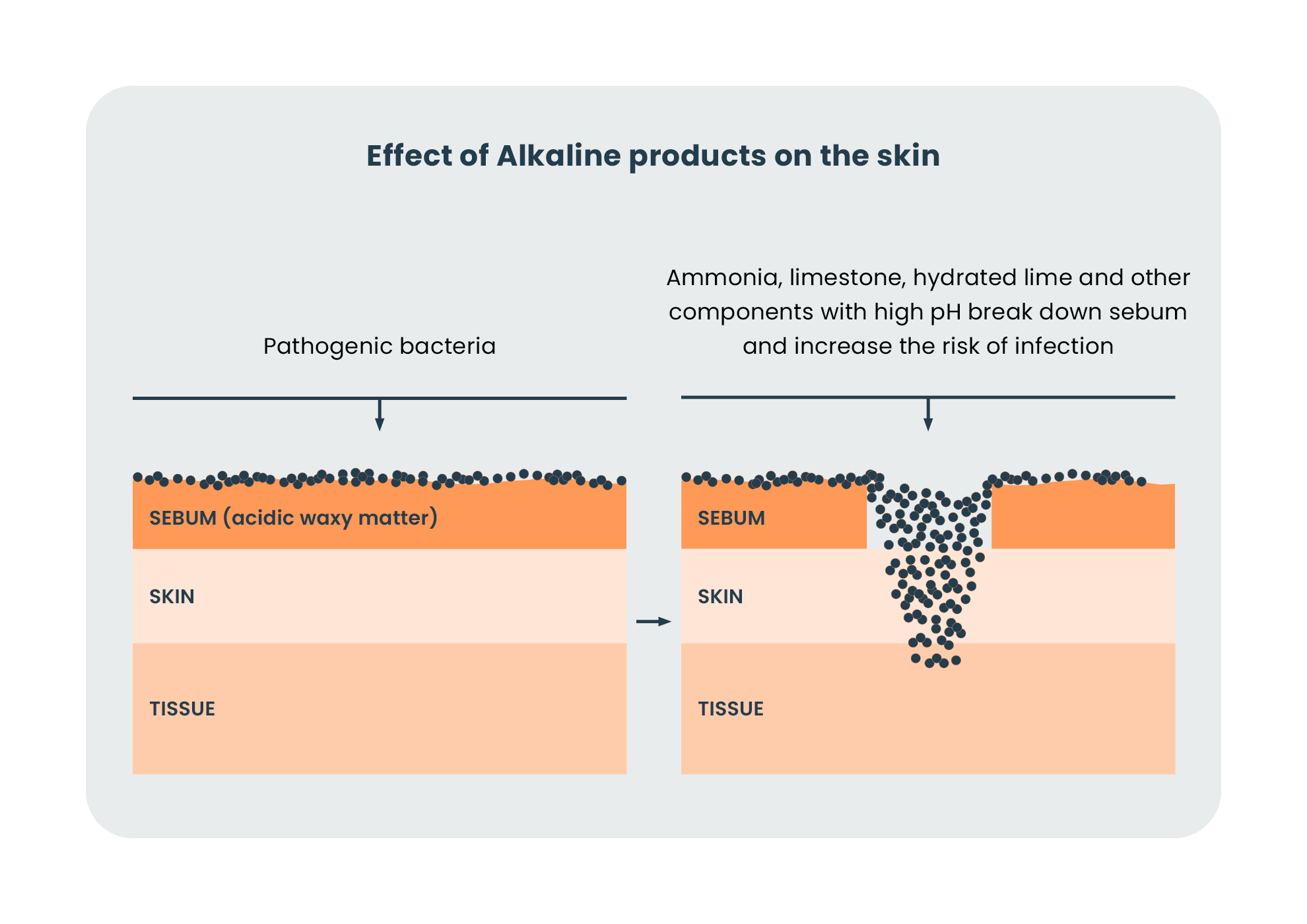
They break down sebum, stripping away that protective layer. Once this happens:
- Skin becomes more exposed and vulnerable
- Harmful bacteria can colonise more easily
- The risk of infection increases significantly
In simple terms, when pH rises, the animal loses one of its most effective natural defences.